Research

The Effects of Police Contracting on Crime: An Examination of Compton, California. Journal of Experimental Criminology, Vol. 14 (1): 59-81, 2018.

The utility of police consolidation, and in particular police contracting of services, has received widespread attention in academic and practitioner circles. However, the bulk of empirical research centers on potential fiduciary benefits; only limited scholarship has explored the possibility that changes in police services may correspond with differences in crimes solved and offenses observed. To address this gap, we examine consolidation in police services in a historically high crime, disadvantaged urban setting (Compton, California), which began contracting with the Los…

Read More

Consolidation of Police and Fire Services in the United States. International Criminal Justice Review, Vol. 27 (3), 203-221, 2017.

More than 100 municipalities across the United States have consolidated their police, fire, and emergency medical services into a single, consolidated agency. As initial reasons to consolidate change or diminish, some agencies have deconsolidated, but many remained consolidated. In this work, we use perspectives of contingency theory and institutional theory of organizations to explore why agencies may remain consolidated. Data and insights are drawn from two expert panels and a series of seven case studies. We found contingency theory helps explain why…

Read More

Partnerships and the Battle Against Product Counterfeits. A-CAPP Backgrounder Series. East Lansing, MI: Michigan State University Center for Anti-Counterfeiting and Product Protection, 2017.

Partnerships among brand owners, governments, academics, consumers, and other stakeholders are essential to tackling the pervasive and persistent global problem of product counterfeiting. This Backgrounder highlights the importance of these partnerships, the need for widespread recognition of the shared nature of problems, and the development of solutions across companies and industries. Read More

Read More

The 2016 A-CAPP Center Brand Protection Strategy Summit: Emerging Challenges, and Progress. Center for Anti-Counterfeiting and Product Protection Paper Series. East Lansing, MI: Michigan State University, 2017.

This paper serves as a summit proceedings report for the 2016 Michigan State University Center for Anti-Counterfeiting and Product Protection Brand Protection Strategy Summit. It highlights many of the discussions that took place during the October 4-5 event. Read More

Read More

Liabilities and Responsibilities: Ocean Transportation Intermediaries (OTIs) and the Distribution of Counterfeit Goods. Maritime Economics and Logistics, Vol. 19 (1), 182-187, 2017.

Ocean transportation intermediaries (OTIs) play a crucial role in the distribution of counterfeit goods across the globe. This article describes how OTIs can be held liable for intellectual property rights violations when they ship counterfeit goods. Additionally, this article proposes several practices that OTIs can adopt to mitigate their exposure to intellectual property rights liabilities. Read More

Read More
Featured Research

Dimensions of a Police Recruitment Program

Policing: An International Journal

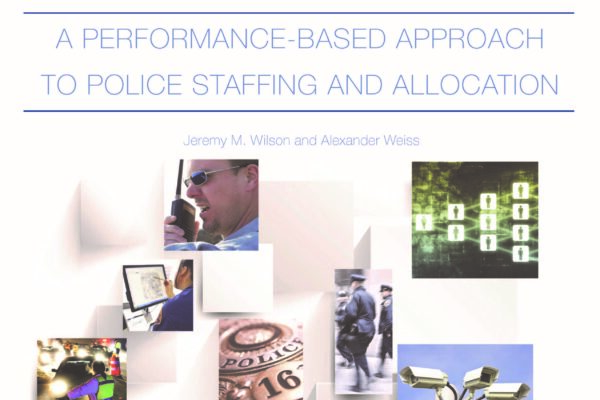
A Performance-Based Approach to Police Staffing and Allocation

U.S. Department of Justice, Office of Community Oriented Policing Services

Brand Protection and the Global Risk of Product Counterfeits: A Total Business Solution Approach

Edward Elgar Publishing

***WINNER OF THE AMERICAN SOCIETY OF CRIMINOLOGY DIVISION ON WHITE-COLLAR AND CORPORATE CRIME OUTSTANDING BOOK AWARD***

Police Recruitment and Selection: Resources And Lessons for Workforce Building

U.S. Department of Justice, Office of Community Oriented Policing Services